
The ABCD of Asset Management
At City of Assets, our experience supporting councils and organisations with major asset management system replacements has shown that success hinges on four key pillars:
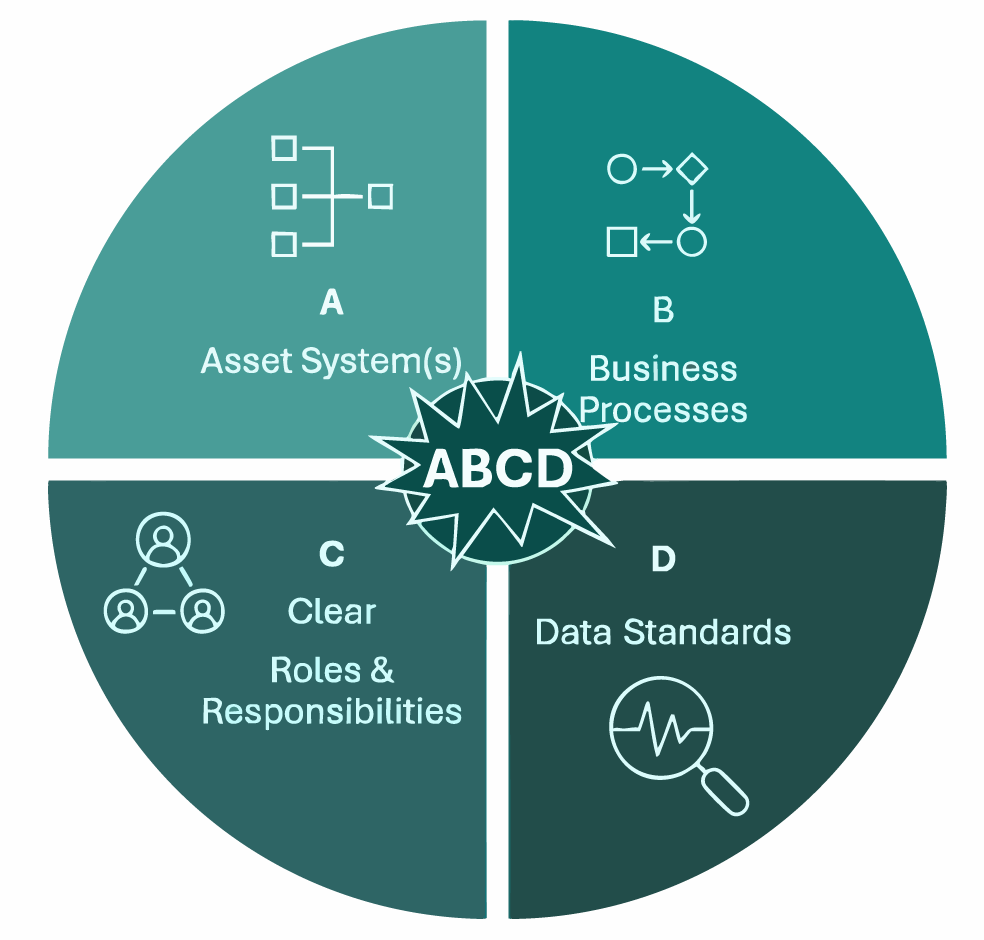
We call this the ABCD of Asset Management, a practical, structured approach that is fundamental regardless of the Enterprise Asset Management (EAM) system in use.
A | Asset Management System
An effective asset management system should evolve with your organisation’s needs. Regular reviews help identify gaps, improve decision-making, and ensure the system delivers timely, accurate data. This is achieved by monitoring performance, implementing user feedback, and embedding continuous improvement.
B | Business Processes
Clear and documented business processes, such as asset handover, are critical for efficient operations. Flowcharts and process maps reduce redundancies and errors, improve visibility, and embed best practices across teams. Continuous performance monitoring enables ongoing optimisation.
C | Clear Roles and Responsibilities
A well-defined roles and responsibilities matrix promotes accountability and collaboration across the organisation. When everyone understands their role in the asset lifecycle, performance improves, costs reduce, and service delivery becomes more coordinated.
D | Data Standards
Accurate and consistent data underpins every aspect of asset management. Strong data standards and governance—across system interfaces and departments—enable informed decision-making and system integration. Regular audits and clear ownership are essential to maintaining data quality.
Why It Matters
Systematic asset management ensures efficient and sustainable use of public resources. It enhances asset performance, extends lifecycle value, improves financial planning, and reduces maintenance costs.
Importantly, it also:
- Strengthens regulatory compliance
- Supports risk management and emergency preparedness
- Builds trust and accountability with communities

Tagging Our Work
Our projects are tagged by focus area to help clients track and reference specific outcomes:
#A – Asset Management System
#B – Business Process
#C – Clear Roles and Responsibilities
#D – Data Standards
Whether you're starting your EAM journey or refining your strategy, the ABCD framework helps you build a strong foundation for long-term asset management success.